
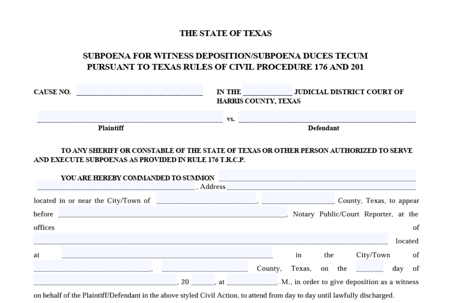
You just received a formal legal document demanding documents or testimony – and the clock is already ticking. Before you decide whether to comply, ignore it, or call an attorney, you need to understand exactly what you're facing and the serious consequences that come with getting it wrong.
What Is a Subpoena?
A subpoena is a legal order from a court commanding you to appear or produce documents at a specified time and place. The term comes from Latin meaning "under penalty," reflecting the serious legal consequences for ignoring this command.
In Texas, you might receive one of two main types:
- Subpoena duces tecum: Commands production of documents or tangible things in your possession, custody, or control. For business owners, this commonly involves contracts, invoices, emails, financial records, or employment documents related to litigation where your company isn't a party.
- Subpoena ad testificandum: Commands you to appear and give testimony at a deposition, hearing, or trial. When directed to an organization, Texas law requires you to designate someone to testify on behalf of the company.
Is It Okay to Ignore a Subpoena?
No. Ignoring a subpoena is never a viable strategy.
Texas law imposes severe penalties for non-compliance:
- Fines up to $500
- Jail time up to 6 months
- Court orders directing law enforcement to physically bring you to court
- Adverse inferences in the underlying litigation – the jury will be instructed that any destroyed or withheld evidence was harmful to your case
Even if you believe the subpoena is improper, you must respond by the deadline – either by complying, filing objections, or seeking court protection.
What Should You Do If You Receive a Subpoena?
Act immediately. The timelines are strict and unforgiving.
- Note the deadline: Most objections must be filed before the compliance date. For depositions in Texas state court, you have just three business days to file a motion to quash that automatically stays the deposition.
- Identify what's being requested: Document production, testimony, or both? What specific information or time period?
- Assess whether you need an attorney: See the section below for scenarios that require immediate legal counsel.
- Preserve all relevant documents: Once you receive a subpoena, you have a legal obligation to preserve documents. Destruction after receiving a subpoena can result in obstruction of justice charges carrying up to 20 years in prison.
- Respond by the deadline: Either comply, file written objections, or have your attorney file a motion to quash or for protective order.
Can You Refuse to Answer a Subpoena?
You cannot simply refuse, but you may have valid grounds to object or limit compliance:
- Geographical limitations: Texas law prohibits compelling you to travel more than 150 miles from where you reside or were served
- Privilege claims: Attorney-client privilege, work product doctrine, trade secrets, or Fifth Amendment self-incrimination rights
- Undue burden: Courts can limit subpoenas that impose unreasonable demands or substantial costs
- Overbreadth or vagueness: Requests that are too broad, unclear, or irrelevant
- Improper service: Subpoena wasn't properly served or lacks required witness fees
Critical warning: Missing objection deadlines waives all objections – including privilege, confidentiality, and relevance challenges. For depositions, file within three business days to automatically stay it. Once that deadline passes, you cannot assert these protections.
Texas-Specific Rules You Should Know
- 150-mile geographical limitation: You cannot be required to appear or produce documents more than 150 miles from where you reside or were served. This is one of the most restrictive rules in the United States.
- Automatic stay for depositions: Filing a motion to quash or for protective order within three business days automatically stays the deposition until the court rules.
- Mandatory cost reimbursement: The party seeking discovery must reimburse non-parties' reasonable costs of production, including employee time, copying costs, attorney review, and IT expenses.
- 10-day clawback window: If you inadvertently produce privileged documents, you have 10 days from discovering the error to assert privilege and retrieve them.
Should You Get a Lawyer If You Are Subpoenaed?
Almost always, yes. An experienced attorney can determine whether the request is proper, file objections to protect your interests, and ensure you comply correctly without overproducing documents or making damaging statements.
Certain situations call for immediate legal representation, such as when:
- Trade secrets or proprietary information are requested: Customer lists, pricing strategies, business methods, technical specifications, or financial projections. Once disclosed, trade secret protection is permanently lost.
- Privileged communications are sought: Attorney-client communications, work product, or legal advice. Inadvertent disclosure permanently waives privilege, potentially exposing your entire litigation strategy.
- Criminal investigation is underway or suspected: Grand jury subpoenas, requests from federal agencies (IRS, FBI, OIG), or any situation where you might be a potential defendant. Statements made without counsel often provide prosecutors with the missing elements needed for charges.
- The request is overly broad or burdensome: Compliance would require massive document volumes, extensive employee time, causing business disruption, or substantial costs potentially reaching tens of thousands of dollars.
- Privacy and confidentiality concerns exist: Employee medical records, HIPAA-protected information, customer financial records, or information subject to non-disclosure agreements with third parties.
- The subpoena appears defective: Missing signatures, improper service, insufficient compliance time, or violations of geographical limitations.
- High-stakes situations: Federal investigations, class actions, matters involving significant damages or regulatory penalties, or cases where contempt sanctions could result in substantial fines or incarceration.
The Hidden Dangers of Going Without Counsel
Business owners who respond to subpoenas without legal guidance face risks that extend far beyond the immediate compliance:
- Privilege waiver: Once attorney-client communications are disclosed, the privilege is destroyed permanently. Courts may find that disclosing communications on one topic waives privilege for all related communications.
- Self-incrimination: Federal prosecutors routinely use civil subpoenas to build criminal cases. The Fifth Amendment must be explicitly invoked – silence alone is insufficient.
- Trade secret disclosure: Providing entire files without redacting proprietary information hands competitive advantages to your opponents. Once disclosed, years of accumulated business intelligence can be destroyed in a single production.
- Creating damaging testimony: Unprepared witnesses often provide testimony that contradicts prior statements or admits elements of claims against them, or volunteer harmful information beyond what was asked.
- Massive unnecessary production: Without counsel, business owners typically produce far more than legally required, dramatically increasing costs and exposure.
What Attorneys Do to Protect Your Interests
Experienced business litigation attorneys provide critical value:
- Challenge improper subpoenas through motions to quash or modify
- Negotiate scope reductions that can save thousands of dollars in production costs
- Assert and preserve privileges through proper objections and privilege logs
- Seek protective orders preventing disclosure of confidential information
- Pursue cost-shifting to make the requesting party pay reasonable compliance expenses
- Coordinate document review to identify and withhold privileged content
- Prepare witnesses for testimony to avoid damaging statements
- Ensure compliance while minimizing burden and protecting your rights
Take Action to Protect Your Business
Subpoenas carry serious legal consequences that extend far beyond the immediate response. The cost of mistakes – permanent privilege waiver, trade secret disclosure, self-incrimination, or contempt sanctions – typically far exceeds the cost of competent legal counsel.
If you receive a subpoena requesting business documents, seeking testimony, or involving any of the high-risk scenarios described above, contact an experienced Texas business litigation attorney immediately.
At Hendershot Cowart P.C., we have defended Texas business owners in complex subpoena matters for over 35 years. We protect your confidential information, challenge improper requests, negotiate scope reductions, and ensure compliance while minimizing business disruption.
Call (713) 783-3110 or contact us onlineto speak with a business litigation attorney about your subpoena.